
Image captions and descriptions are easy to skip when photos are uploaded in a hurry. The caption is the short line WordPress offers under an image when you add it to a post, and the description is a good place for photo credits and notes on where the image is used. With Import Export by RockStarLab you can export the images that have no caption, write the captions and descriptions in a spreadsheet, and import them back in one go. The example uses eight photos of a coffee roastery.
Free: Media export and import, including caption and description.
Short Answer
- Export Media with the filter Caption Is Empty and the columns ID, File Name, Title, Caption and Description.
- Fill the
post_excerpt(caption) andpost_content(description) columns, then keep only those two andID. - Import the file into Media with Check for Existing Items by Field set to ID, Update for matches and Skip for new items.
1. Export the images without a caption
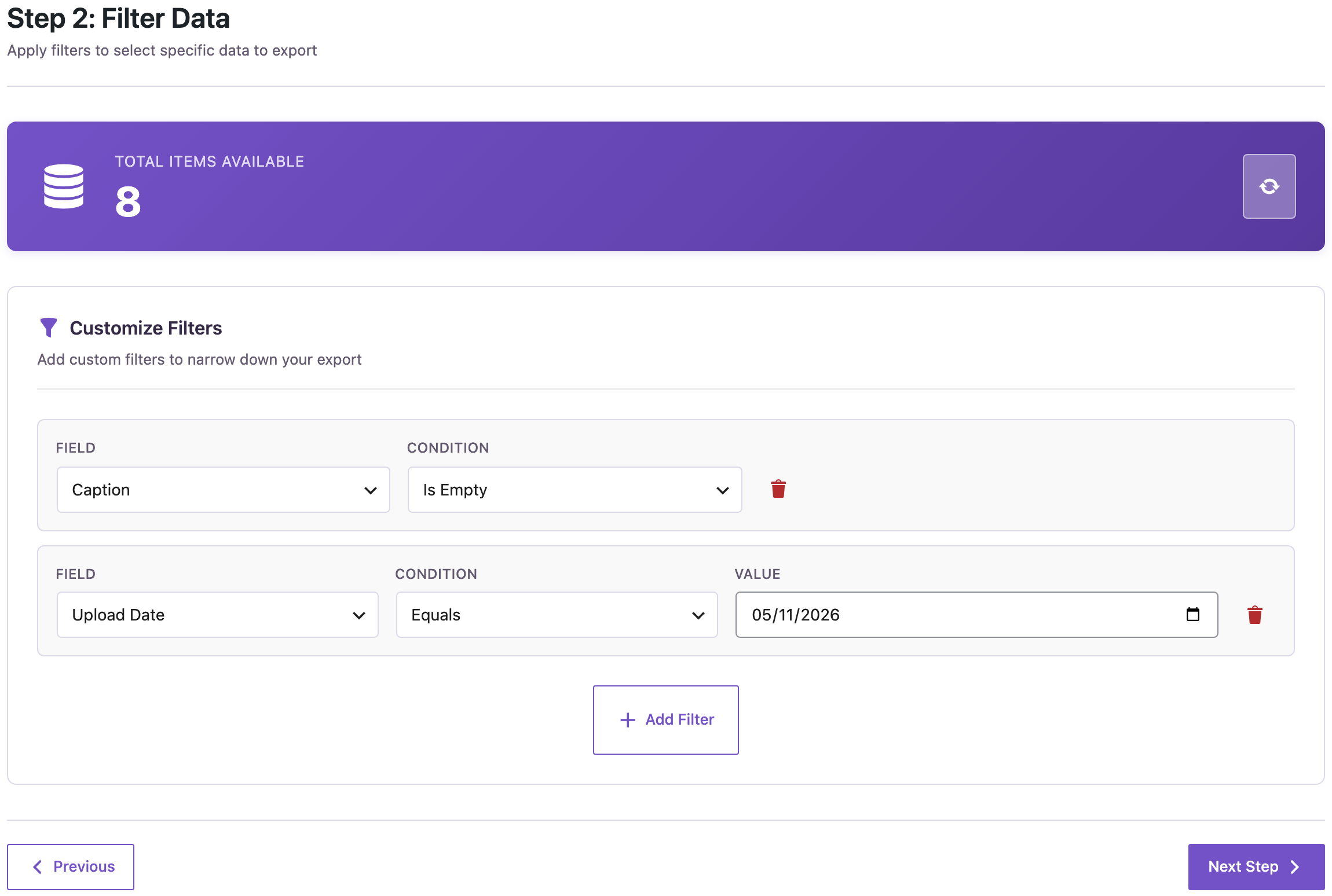
Go to Export, choose Media and add the filter Caption, Is Empty. We added a second filter, Upload Date Equals the day the roastery photos were uploaded, and the counter showed 8:
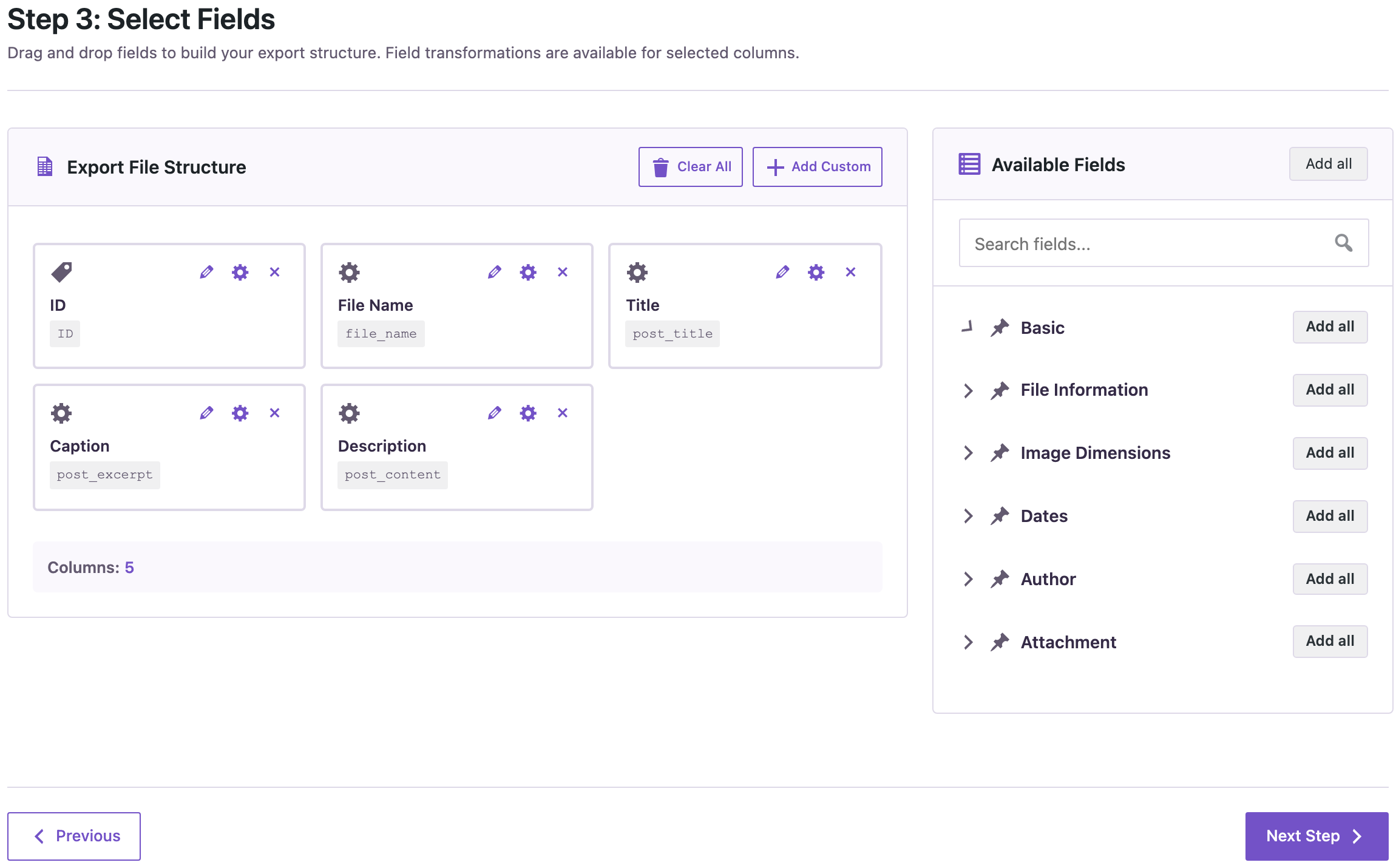
On the field step we chose ID, File Name, Title, Caption and Description and exported a CSV. In the file, the caption column is called post_excerpt and the description column post_content, which are the names WordPress uses for these fields:
2. Write the captions and descriptions
Use the file name and title to recognize each photo, or keep the Media Library open next to the spreadsheet. We wrote a short caption and a credit line for each image. Before the import we deleted the File Name and Title columns, so the file had three columns:
| ID | post_excerpt (caption) | post_content (description) |
|---|---|---|
| 1862 | Picking ripe cherries with the Mukami family, Nyeri, Kenya | Photo: Example Roastery, origin trip 2025. Free to use with credit. |
| 1860 | Kenya Nyeri AA, washed: blackcurrant, grapefruit, cane sugar | Product photo for the Kenya Nyeri AA bag, 250 g. |
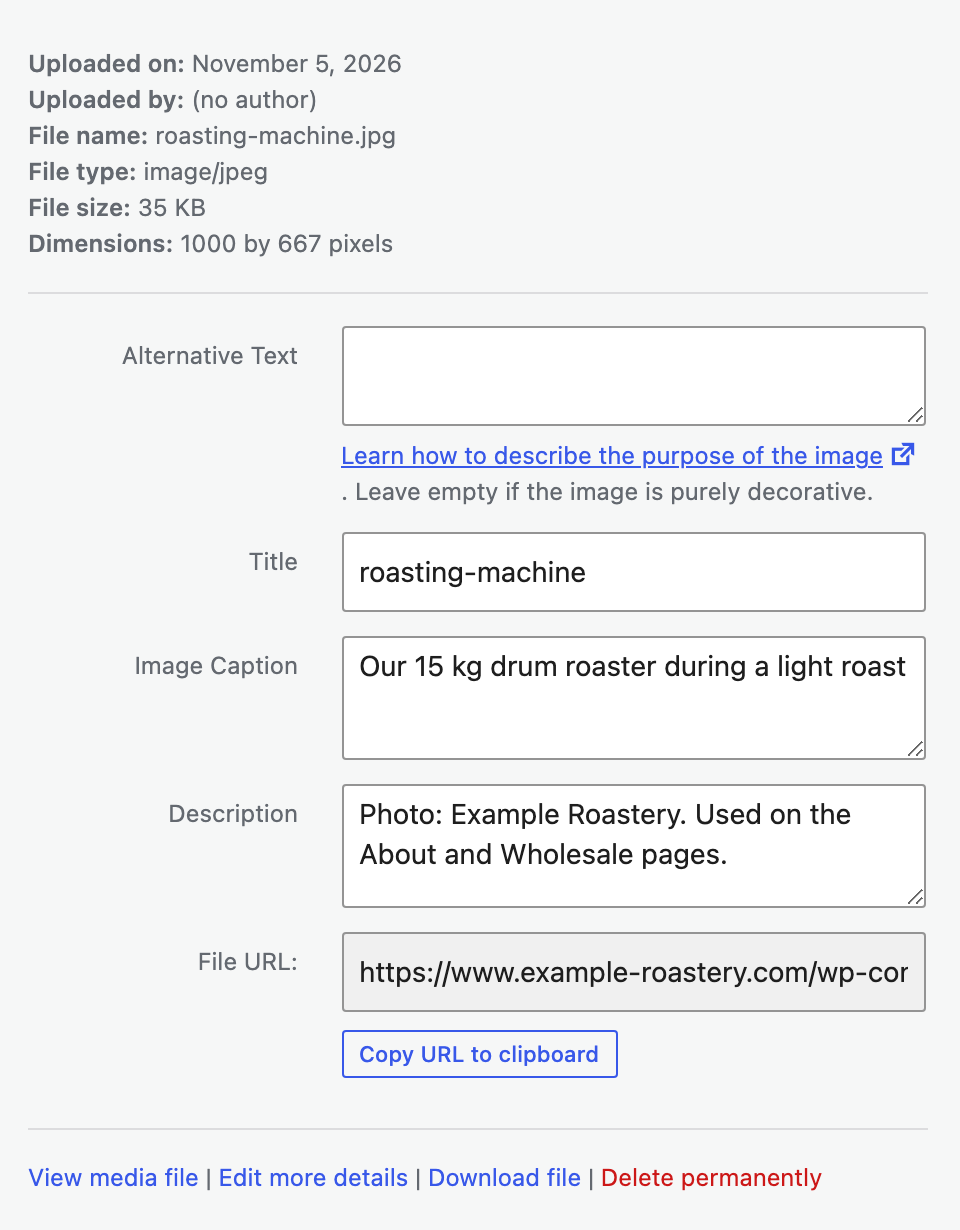
| 1853 | Our 15 kg drum roaster during a light roast | Photo: Example Roastery. Used on the About and Wholesale pages. |
| 1852 | The roastery café on Harbour Street | Photo: Example Roastery. Used on the Contact page. |
The table shows four of the eight rows.
3. Import the captions
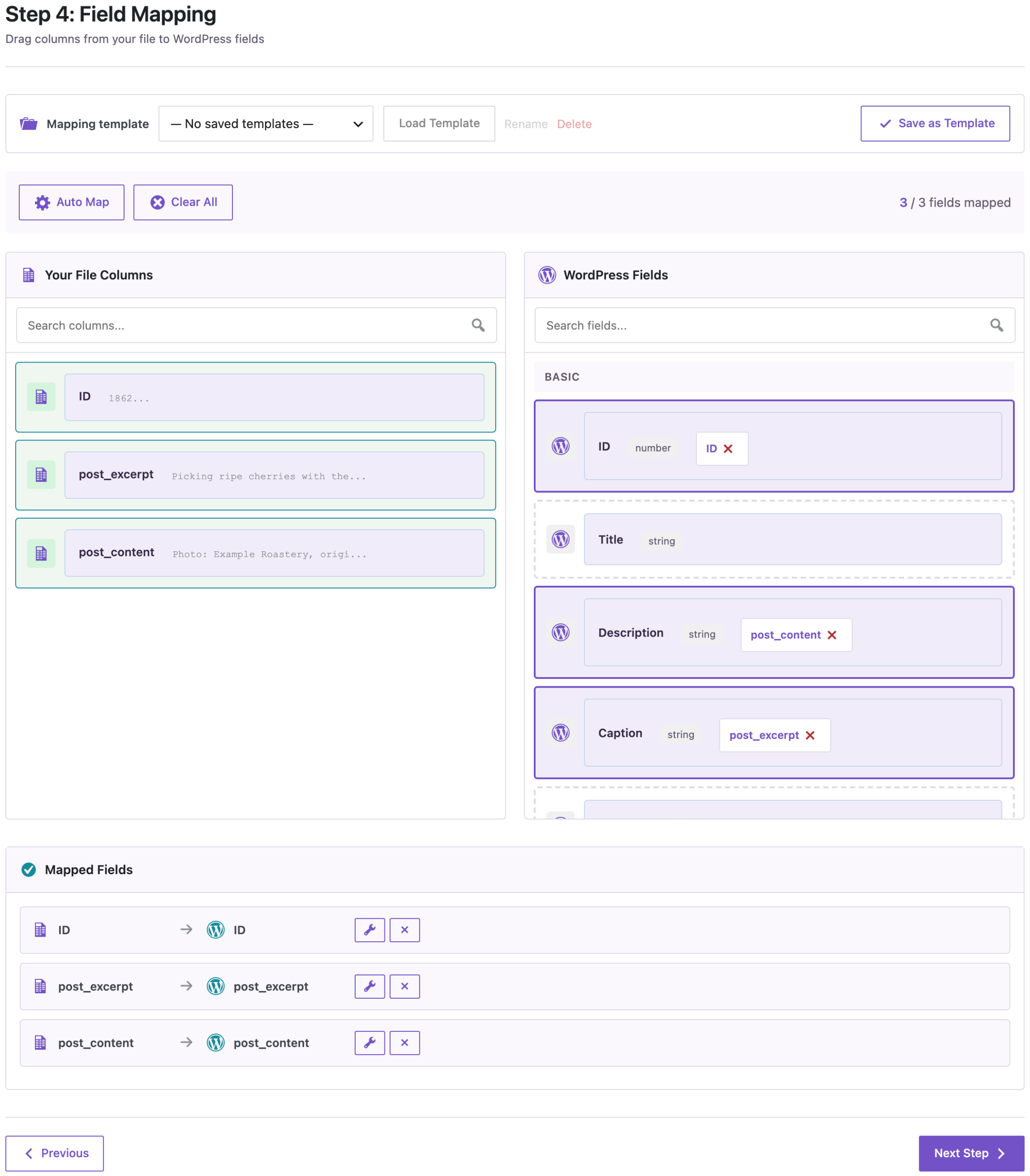
Go to Import, choose Media, upload the CSV and click Auto Map. The three columns were mapped to ID, Caption and Description:
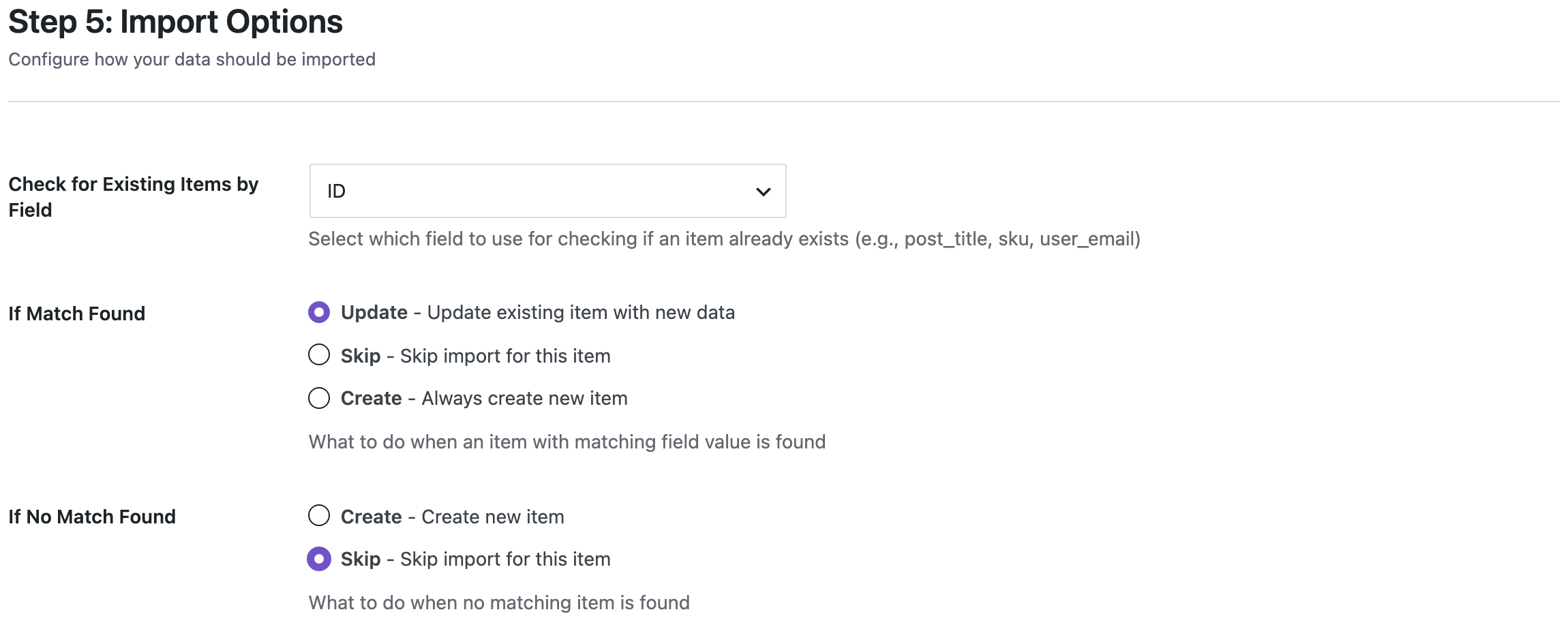
On the options step, set Check for Existing Items by Field to ID, If Match Found to Update and If No Match Found to Skip:
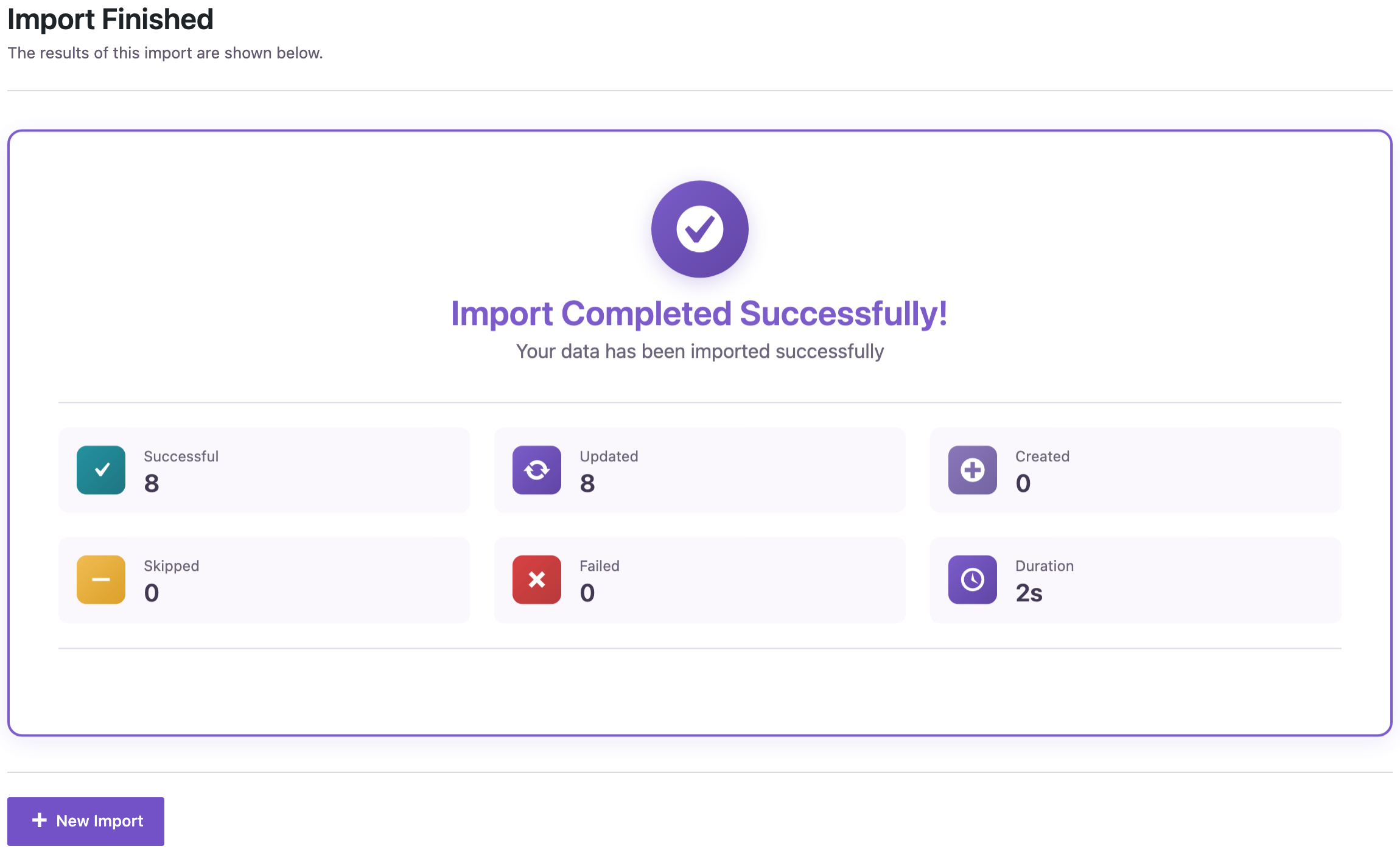
The import updated all eight images in two seconds, with nothing created:
4. Check the result
Open an image in the Media Library. The Image Caption and Description fields show the imported text, and the title, the file and the upload date stayed the same:
When you add the image to a post from the Media Library, WordPress fills in the caption from the library. Images already placed in posts keep the caption saved in the post, so this import doesn’t change them.
Before you import
The import changes the Media Library. Keep only the ID and the columns you want to change, check the IDs, and back up the site before you update many images. Alt text can go into the same file: add the alt_text column, as described in adding image alt text from a spreadsheet.
With an AI agent
An AI agent connected through the WordPress MCP Adapter (see connecting Claude Code to WordPress) can check the result:
Show the captions and descriptions of the roastery photos.In our run, the agent called rsl-ie/export-preview for media with the fields ID, file name, caption and description and the eight image IDs. It returned all eight images with their new text, for example roasting-machine.jpg with the caption “Our 15 kg drum roaster during a light roast”.
FAQ
Which columns hold the caption and the description?
post_excerpt is the caption and post_content is the description. In the export wizard they are listed as Caption and Description.
Will the import change the image files or titles?
No. With only ID, caption and description in the file, the file, title and upload date stayed the same in our test.
Does this change captions in existing posts?
No. Images in posts keep the caption saved in the post. The library caption is used when you add the image again.
Related Guides
- Bulk Add Image Alt Text in WordPress from a Spreadsheet
- How to Export WordPress Media Library Files to CSV or Excel
- Find Unattached Media in WordPress and Check If It Is Really Unused
Get the free plugin on WordPress.org.

Comments 0
Have a question or a tip to share? Leave it below.